

Imagine an electricity network that can recognize a problem before equipment fails.
Imagine a system that can predict when solar or wind energy will be available, understand how much electricity people need and automatically help engineers decide how that energy should be used.
This is the kind of future Bangladeshi electrical engineer and researcher Abdullah Al Fathah is exploring through his work with artificial intelligence and renewable energy.
Based in Texas, USA, Fathah is researching how AI can help create energy systems that are more intelligent, efficient and environmentally friendly.
Energy Systems That Can Predict and Learn
Today’s power networks are much more complicated than they were in the past.
Electricity comes from traditional power plants, solar farms, wind farms and other sources. Demand changes throughout the day. Industries may suddenly require large amounts of power, while renewable generation can rise or fall depending on weather.
Managing all of this requires increasingly complex decisions.
Fathah’s research focuses on using artificial intelligence and advanced prediction to make some of those decisions easier.
His work explores AI-driven autonomous systems that can analyze data, predict future conditions and find more efficient ways to manage energy.
The aim is to improve renewable-energy integration, strengthen electricity-grid efficiency and reduce carbon emissions across multiple industries.
Turning Data Into Decisions
Modern electrical equipment can produce huge amounts of information.
The problem is that simply collecting data does not automatically improve the power system.
Someone, or something, needs to understand what the data means.
That is where Fathah sees an important role for AI.
Instead of showing engineers thousands of readings, intelligent systems could study the information and highlight what matters most.
They could help answer simple but important questions:
Is an equipment problem developing?
Will electricity demand increase?
Is renewable energy being used efficiently?
Can the system operate with less energy waste?
Fathah’s research uses prediction and data analysis to explore these kinds of questions.
Reducing Energy Waste and Carbon Emissions
Improving efficiency is closely connected with another global challenge: carbon emissions.
Industries need energy to operate, transportation needs energy to move people and goods, and modern cities require enormous amounts of electricity.
Fathah’s work explores how smarter control and better use of renewable energy could help reduce unnecessary energy consumption.
His research record includes data-driven approaches to carbon reduction and renewable-energy optimization across different sectors.
Rather than focusing only on producing more energy, the idea is also to use existing energy more intelligently.
Bringing Research Into the Real World
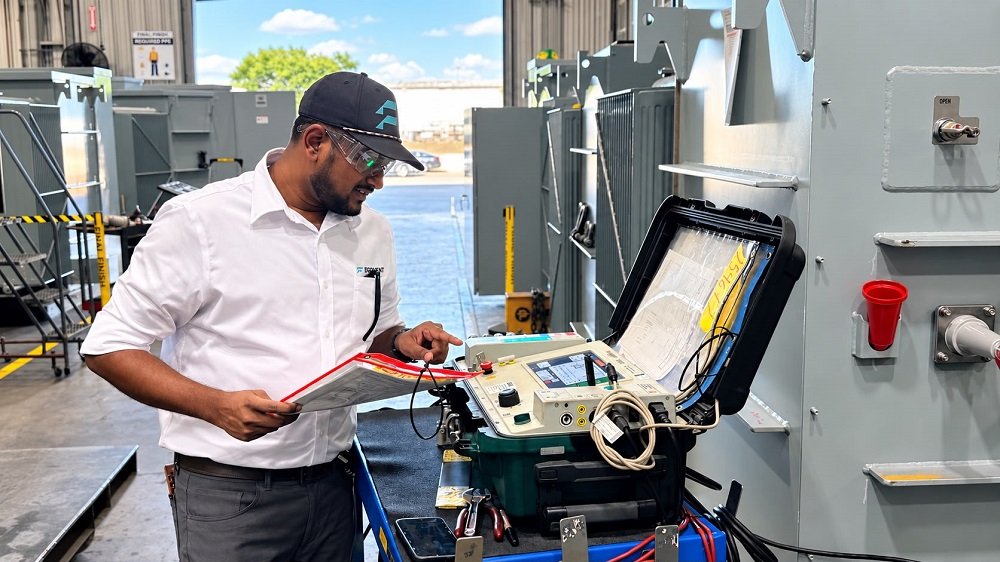
Fathah currently works in the electrical power industry with Forgent Power Solutions’ VanTran transformer business in Texas.
His professional work with medium-voltage transformers gives him a direct view of how electrical infrastructure is designed and used in real projects.
His latest transformer research explores whether AI can help identify equipment problems earlier.
But for Fathah, transformers are part of a much larger picture.
His research has also covered predictive maintenance for smart grids, renewable-energy systems, solar technologies, cybersecurity and carbon reduction. His published work has been referenced by other researchers working in related electrical-engineering and renewable-energy fields.
Why This Matters Globally
The energy transition is happening everywhere, but not every country is starting from the same place.
Some countries are replacing aging electrical infrastructure. Others are rapidly building new power systems to support population growth and industrial development.
At the same time, almost every country is looking for ways to increase renewable energy while maintaining reliable electricity.
This makes the connection between artificial intelligence and energy increasingly important.
In countries such as Bangladesh, future AI-based energy systems could help support industrial growth, renewable-energy expansion and better management of electricity resources.
Looking Ahead
Fathah believes the next generation of electrical systems will become much more intelligent.
Instead of simply carrying electricity, future power systems will increasingly collect information, understand changing conditions and help make decisions automatically.
His research vision is to develop technologies that allow energy systems to predict, learn and optimize.
The ultimate goal is straightforward: make renewable energy easier to use, make electricity networks more reliable and help industries reduce unnecessary energy consumption and carbon emissions.
As artificial intelligence continues to change industries around the world, Fathah’s work represents one example of how Bangladeshi engineers are contributing to the future of global energy.
““My goal is to develop AI-driven energy systems that can learn from data, predict problems early, and help renewable energy work more efficiently within modern power grids.”