When the lights turn on at home, few people think about the engineering behind that simple moment. Electricity has to travel through a network of equipment that controls voltage, manages heavy loads and protects the system when something goes wrong. For Bangladeshi engineer Abdullah Al Fathah, understanding that unseen network has become the link between his research and his work in the United States.
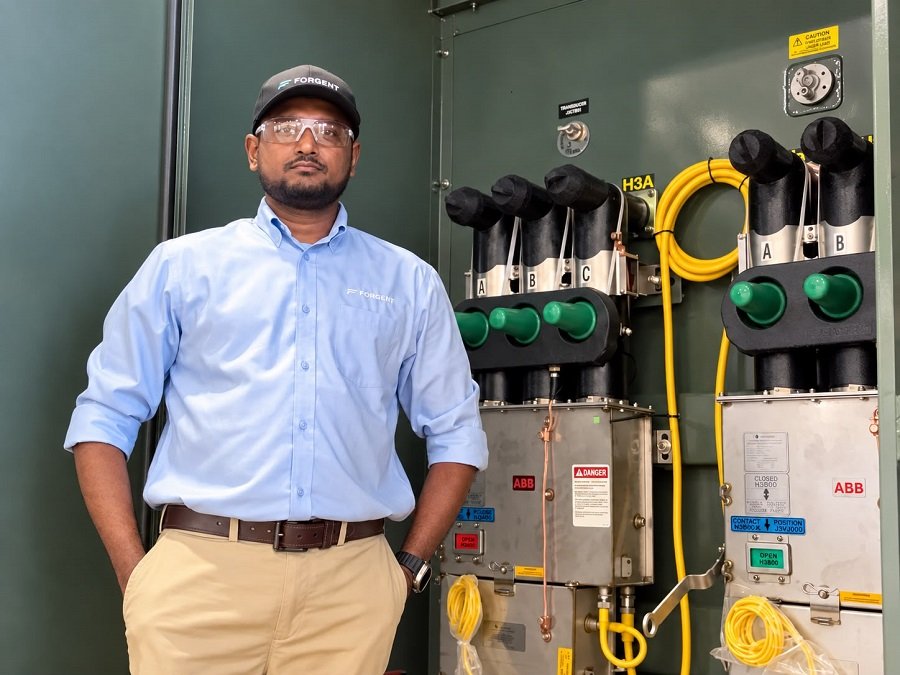
Fathah began his engineering career in Bangladesh, working with electrical and industrial-energy equipment. He later continued his education in the United States and earned a Master of Engineering in Electrical Engineering from Lamar University in Texas in May 2025. Today, he works as an engineer in the U.S. transformer industry, helping translate customer requirements into technical proposals and coordinating with design engineers on equipment used in power distribution and industrial applications.
It is a job that demands more than knowing a transformer changes electricity from one voltage level to another so it can be transmitted and used safely. Before one can be supplied for a project, engineers must understand how much power it will carry, how it should respond to faults, what temperatures it will face and how it will work with protection and control equipment.
Fathah’s responsibilities involve reviewing those requirements, resolving technical questions and helping engineering teams determine how proposed transformer solutions meet the intended application. The work has brought him into contact with the needs of utility systems, renewable-energy infrastructure and industrial power users.
Research that asks whether machines can warn engineers earlier
Alongside his industry work, Fathah has a publication record in artificial intelligence, renewable energy and power systems. A 2023 paper he co-authored explored how the Internet of Things—ordinary equipment fitted with connected sensors—and artificial intelligence could support predictive maintenance in electric grids.
The idea is easy to picture. Just as a car may show warning signs before its engine fails, electrical equipment can produce changes in temperature, vibration, voltage or load before a serious problem develops. The study examined how regression analysis and deep-learning methods could use such readings to identify patterns associated with possible faults.
The study examined a possible analytical approach, rather than reporting a completed grid installation. Still, the connection is clear: to make sense of a warning from a transformer, a computer model needs the same understanding of loading, temperature, insulation and protection that practicing engineers use.
Fathah’s academic record has also drawn attention beyond his own research group. Independent researchers have cited his work on building-integrated solar energy and discussed its relevance to photovoltaic materials and buildings that generate part of their own electricity. Academic citations are not the same as industry adoption, but they show that the ideas have been considered in other researchers’ work.
A plan built around testing, not just promising
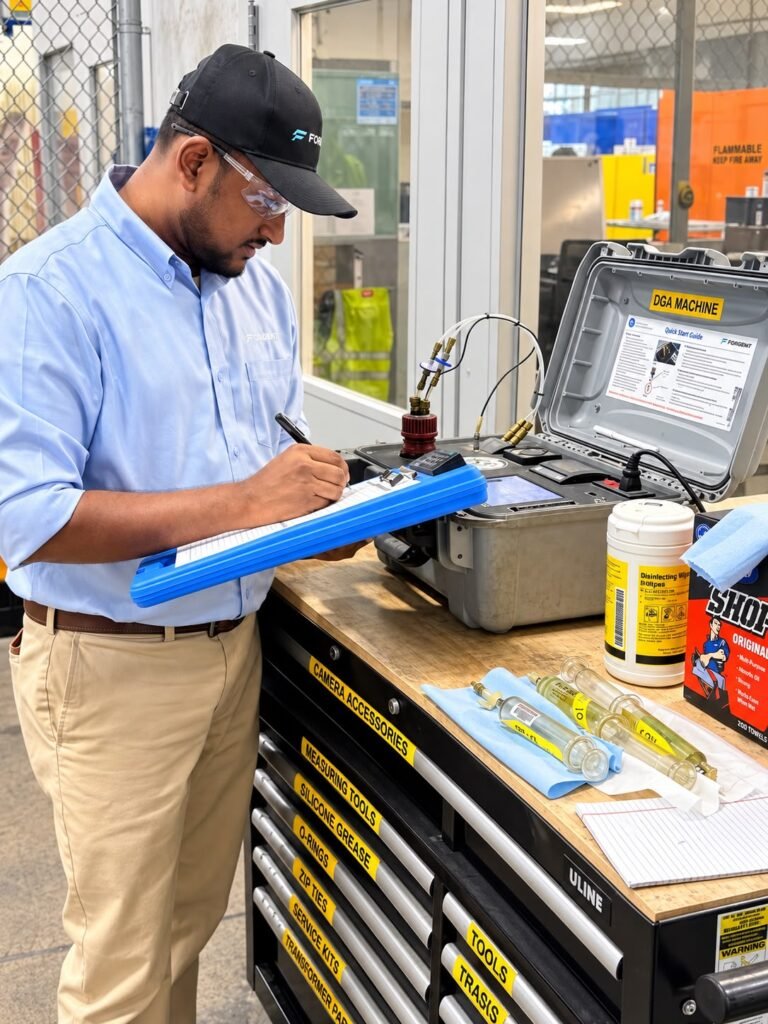
His next research steps focus on turning the ideas into measurable tests. He plans to start with publicly available or properly authorized data showing the operating condition of electrical equipment. That information would be compared with established engineering checks—such as temperature limits and, where suitable, laboratory analysis of transformer insulating oil.
He then intends to evaluate computer models that can flag unusual conditions, classify possible faults and estimate when maintenance might be needed. A central test will be whether the models perform better than conventional methods without producing too many false warnings. He also plans to examine different operating conditions, because equipment serving a factory may behave differently from equipment connected to solar generation or battery storage.
A related line of work would use electricity-demand forecasts to explore how batteries and renewable energy might be managed more efficiently. Those plans are still at the research stage and will require careful testing before any real-world use.
What it could mean back home
For Bangladesh, where growing cities and industries depend on dependable electricity, the questions are familiar even if the technology is still developing. Better maintenance warnings could eventually help operators repair equipment before a shutdown; better coordination of solar power and batteries could help make variable energy sources easier to use.
For now, Fathah’s story is about the work between those possibilities and a finished solution: a Bangladeshi engineer using his research background in the American power industry while setting out practical ways to test what intelligent energy systems can—and cannot—do.